









Prologue
In Bosnia and Herzegovina, progress rarely follows a straight line. Its institutional complexity is not a barrier to reform, but a reality that must be acknowledged and carefully shaped. In such an environment, true transformation does not come through forced unification, but through thoughtful alignment. This is the story of that movement — a symphony in three complex movements.
Movement I — Obliquity as the Right Path for BiH
It all began in 2010, at a time when political ambitions clashed with the country’s constitutional structure. EU reforms pushed toward centralization, but BiH’s reality remained fragmented — including in SME policy frameworks. Instead of confrontation, we sought alignment — a continuous convergence of entity-level SME support policies, guided by the SBA (Small Business Act) as a shared European and regional framework. Obliquely — if we align with the EU framework, we align with each other. As the saying goes: the shortcut is often the longest route, and the long way round is sometimes fastest.
This was a departure from linear logic toward the obliquity approach — using external harmonization as a lever for internal convergence. Not avoidance, but realism. Thus, our overture began.
Movement Ia – Aligning Perspectives
In parallel, we began the gradual alignment of public- and private-sector perspectives, taking on the demanding role of facilitator and moderator of a multitude of actors and their interactions, through which less planned and less perfect — but realistic — solutions and positive changes emerged.
Within the CREDO Krajina project, by applying the concept of systemic competitiveness and a systemic insight into market, governance, and networking failures, we designed a smaller number of better-targeted interventions, with significantly richer interactions and with effects far greater and better than originally planned or expected. Our unexpectedly strong success in working with the private sector and in facilitating its interactions with support institutions has become both an impetus and a kind of model, increasingly taking shape in the approaches of international projects supporting the private sector in Bosnia and Herzegovina.
Movement II — In the estuary
As we ventured further into complexity, we entered the estuary — a space of uncertainty and transformation. Instead of rigid plans, we began to apply a vector-based theory of change, tools like SenseMaker, Cynefin, and thinking in terms of the “adjacent possible.”
We listened. We mapped. We tested and reflected. Some actors were like rocks — needing rare but strategic intervention. Others were like shifting sandbanks — constantly changing shape, requiring careful navigation. Change did not come from the top, but from a web of small, aligned shifts.
Movement III — Working with Smiling
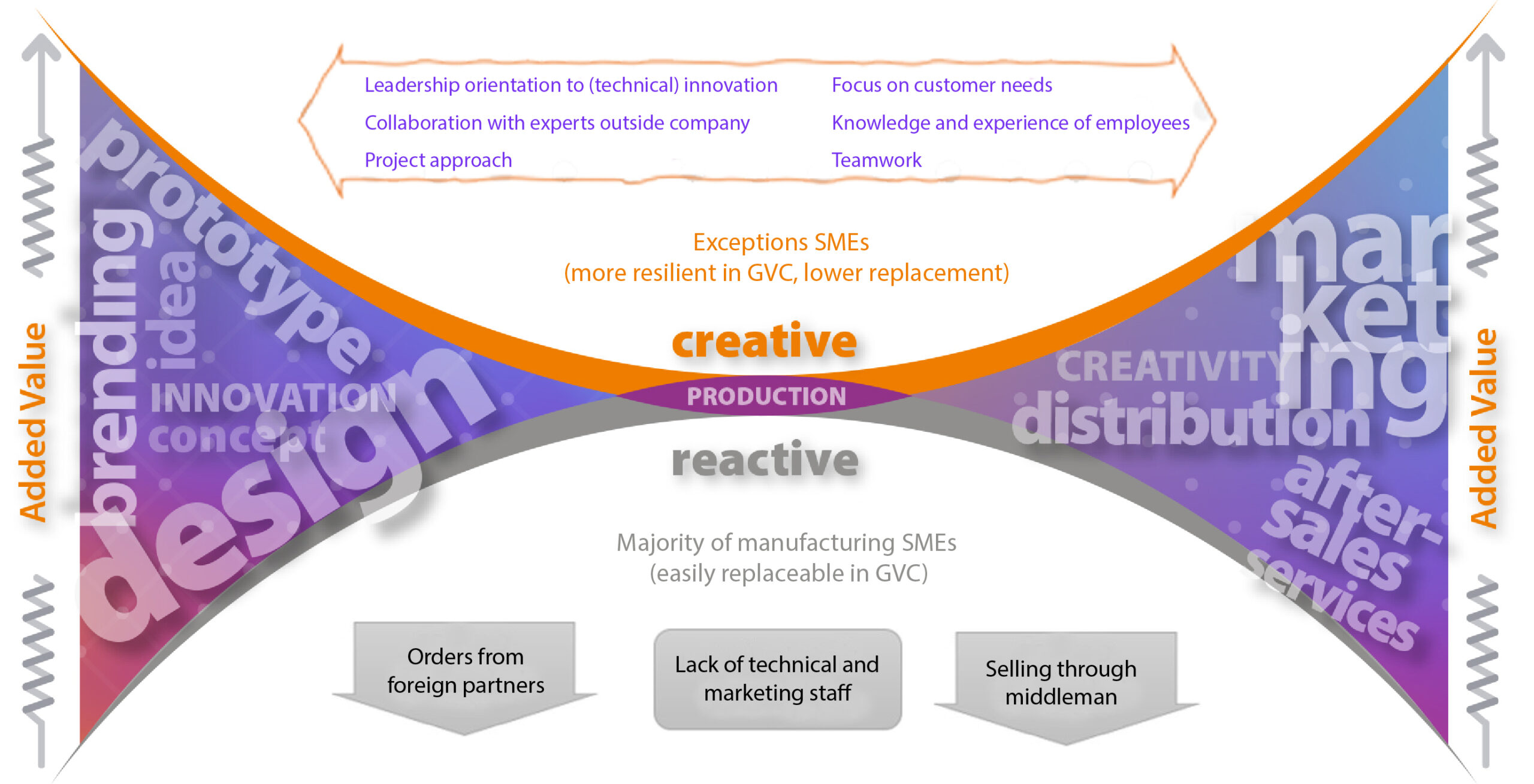
The next movement arrives with a smile — or more precisely, with the Smile Curve. We saw that most industrial SMEs in BiH were stuck in production as a low-value segment — performers, not creators.
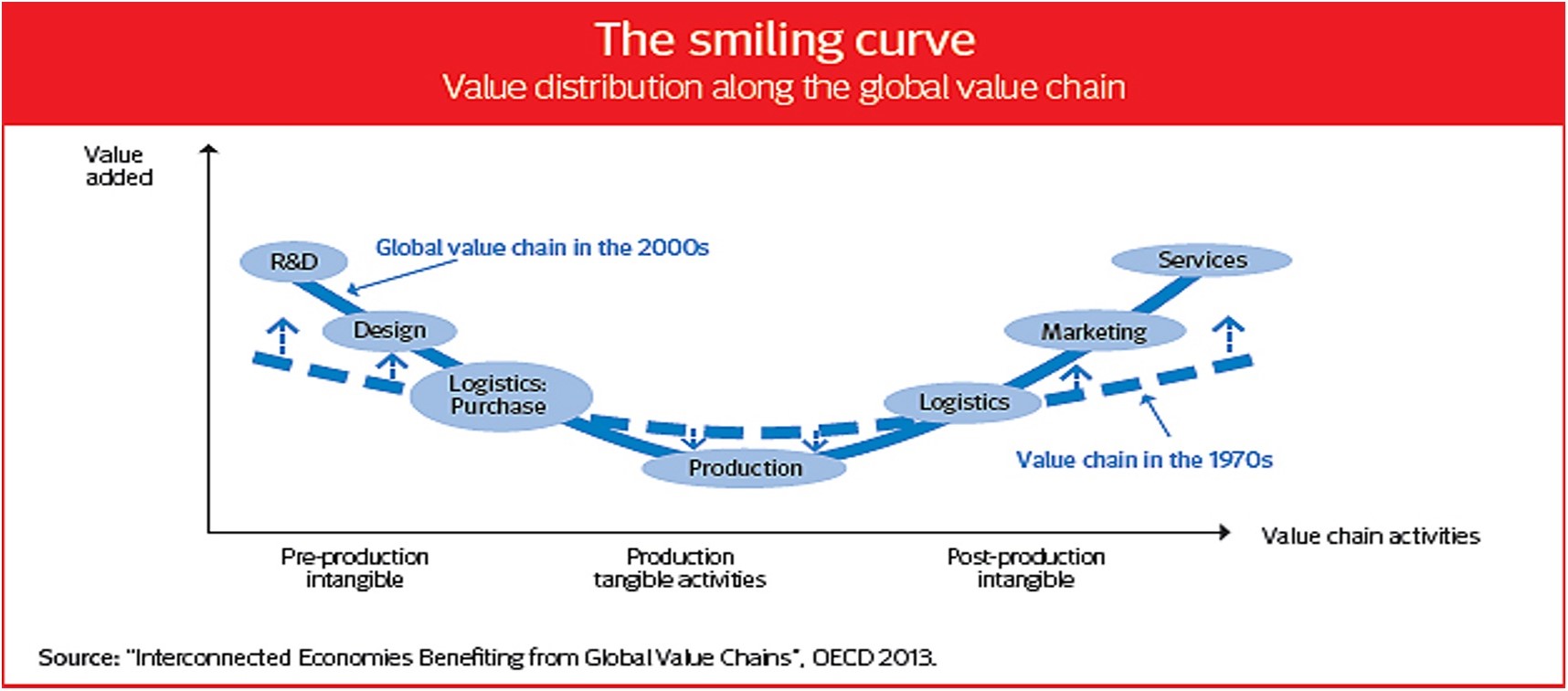
Instead of seeing this as a limitation, we saw an opportunity. Startups and knowledge-based services have become potential drivers of change. Not to replace manufacturing, but to complement and enhance it — before and after the production line. This marked the beginning of co-creating new value — working with smiling.
Movement IIIa — The Coming of SPRING
The final movement is not an ending but a release of built-up energy. The DESET project scales up models and impacts of support for the energy transition of SMEs by digital technologies. SPRING arrives with double force: as a symbol of a new season and as a resilient mechanism — able to bend and return stronger.

Through SPRING, we are building networks between startups, experts, and export-oriented companies. We are introducing investment readiness accelerators, policies shaped by real-world feedback, and learning how transformation can happen organically — from within.
Toward an Open Future
This symphony does not end. Its tones continue in workshops, data, networks and networking platforms. Our task is no longer just to play, but to co-compose with others — flexibly, responsibly, and contextually.
Join us – the network is open!

In Eda, we don’t try to force the circle into a square.
We learn to bend. To co-compose.
And — when the tide turns — to rise.